
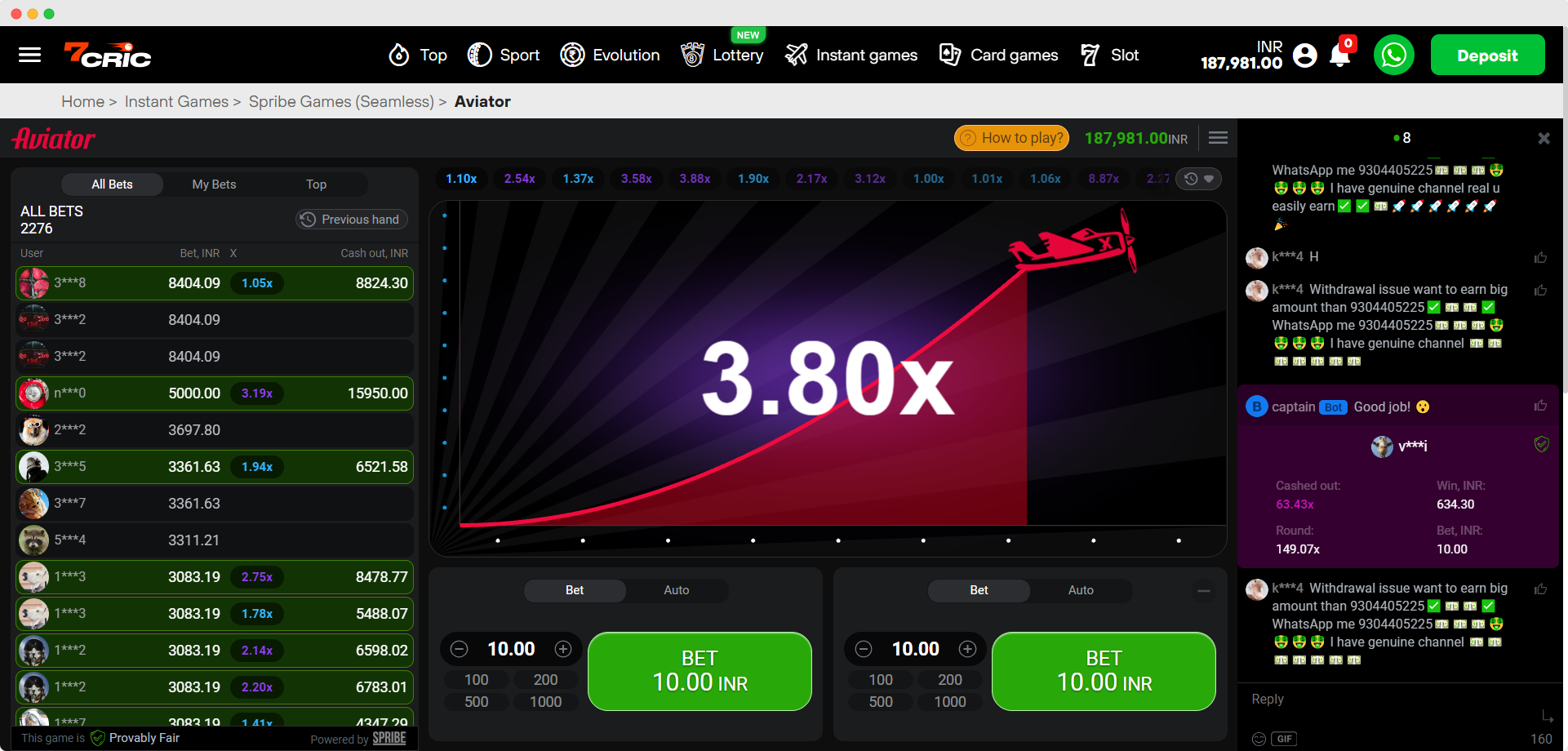
Falling symbol slots have flipped the script on how players from Canada view the reels. The Aviator best sportsbook slot from Wazdan showcases the thrill and the pitfalls better than most. Instead of spinning and stopping, an avalanche game clears winning symbols, inserts new ones into the gaps, and can string together several payouts from a single paid spin. Aviator packages this cascade mechanic in a retro aviation theme, with a multiplier gauge that climbs with each consecutive collapse. The excitement is tangible, but the mechanic also brings a series of missteps that silently consume a bankroll. Users who view an avalanche chain like a guaranteed payout, ignore volatility, or misjudge the multiplier structure often walk away frustrated despite the game’s solid 96.19% RTP. Understanding how cascading wins really behave, and where the typical mental traps are, converts a session with Aviator from a speculative game into a more managed, entertaining ride. This article analyzes the exact mistakes that catch out even veteran slot enthusiasts and reveals how to bypass them while maintaining the fun in the cockpit.
Problem #2: Going After the Multiplier Meter Without a Bankroll Approach
The multiplier meter in Aviator exerts a magnetic pull that can override sensible money management. Seeing the meter tick from x1 to x2, then x3, and occasionally x5 or beyond during free spins builds a sense of momentum that tempts players to keep spinning until they see the meter max out. This chase mentality is dangerous because the meter resets at the end of every spin sequence, and there is no guarantee the next spin will produce even a single cascade, let alone a chain long enough to reach the higher multipliers. Players who boost their bet size after a dry spell, expecting to capitalize on a perceived “due” multiplier, often exhaust their bankroll faster than they realize. Aviator’s high volatility means long stretches of non-winning spins are common, and the cascading mechanic can go dormant for dozens of spins in a row. Without a predetermined loss limit and a clear bet-sizing plan, the pursuit of that x15 free-spin multiplier can turn a casual session into a costly one.
A practical approach for Canadian players is to treat the multiplier meter as a bonus enhancer rather than a target. Creating a session budget in Canadian dollars and dividing it into a fixed number of spins at a comfortable bet level—say 100 spins at 0.50 CAD each for a 50 CAD budget—removes the temptation to chase. If the meter climbs, the reward is a pleasant surprise; if it doesn’t, the bankroll lasts long enough to enjoy the game’s other features. It also assists to remember that the multiplier applies only to the win of that specific cascade step, so even a x5 multiplier on a tiny win doesn’t justify overbetting. Players who treat Aviator as a high-variance entertainment product rather than a multiplier-hunting exercise tend to walk away with a more satisfying experience, regardless of whether the meter ever reaches its peak.
Error #6: Neglecting to Adjust Bet Size to Align with the Game’s Pacing
Avalanche slots have a distinct tempo that stands apart from traditional spin-and-stop games, and not aligning bet size with that rhythm is a slight but detrimental error. In Aviator, a single paid spin can resolve in seconds if no win lands, or it can expand into a ten-second cascade sequence with multiple tumbles and multiplier increments. This variability means the number of spins per hour can vary wildly, and a player who selects a bet size based on a slow, deliberate pace may discover themselves churning through their bankroll much faster than expected during a streak of quick dead spins. In contrast, a player who bets too conservatively during a cascade-rich session might forgo the chance to take advantage of a favorable run. The game’s bet range of 0.20 CAD to 100 CAD per spin offers plenty of room to adjust, but the key is to pick a level that enables for at least 150 to 200 spins within the session budget, given the high volatility.
A effective method is to divide the total session bankroll by 200 and apply that figure as the base bet, then resist the urge to raise it after a few losing spins. For example, a Canadian player with an 80 CAD budget would determine the bet at 0.40 CAD per spin. This strategy secures that even an extended cold streak does not wipe out the balance before the game’s natural variance has a chance to generate a cascade chain. It also avoids the opposite mistake of reducing the bet to the minimum after a big win out of fear, which can reduce the excitement of a hot streak. The avalanche feature’s multiplier meter benefits patience, and a bet size that allows for a long session gives the meter more opportunities to climb. Players who continually fiddle with the bet level in response to short-term results often end up undermining the very volatility that renders the game engaging in the first place.
Chyba #1: Believing Every Cascade Ensures a Bigger Win
One of the stickiest myths about avalanche slots is that a long chain of cascades automatically means a massive payout. Players watch symbols explode, see the multiplier meter climb, and mentally tally a ballooning balance that often never shows up. In Aviator, the base win that starts the cascade might be a three-of-a-kind combination of low-value card symbols worth only a fraction of the total bet. Even if the multiplier reaches x5 after four consecutive avalanches, the multiplied amount can still be modest because the underlying win was small. For example, coinmarketcap.com a cascade that begins with a win of 0.50 CAD on a 2 CAD spin yields only 2.50 CAD at the x5 multiplier level, which feels flat after the visual fireworks. The paytable shows that the lowest-paying symbols return between 0.5x and 1.5x the bet for five of a kind, while the premium symbols can pay up to 15x the bet for a full line. A cascade chain that mixes low and medium symbols will produce a total win that is the sum of each step’s multiplied value, not a single enormous prize. Considering every tumbling sequence as a jackpot event leads to overestimating the game’s short-term profitability and can cause players to raise their bets chasing a feeling the numbers don’t support.
Another layer of this mistake surfaces when players compare avalanche slots to traditional single-spin games and assume the multiple wins per spin give them a mathematical edge. One paid spin can generate several separate payouts, but the game’s overall return to player percentage already accounts for the frequency and size of these chains. Aviator’s 96.19% RTP is calculated over millions of spins and includes all the cascading sequences, dead spins, and bonus rounds. A spin that produces five cascades and pays 20x the bet is balanced by many spins that produce zero wins or a single tiny payout. The cascading feature does not increase the RTP; it just redistributes the payout structure into more volatile, clustered bursts. Canadian players who keep this in mind are less likely to fall into the trap of believing a cascade in progress is a sure sign of a big reward. Instead, they can enjoy the chain reaction for what it is—an entertaining way to deliver wins that would otherwise need multiple separate spins—without letting the visual drama distort their expectations of the final payout.
How Avalanche Mechanics Really Work in a Game Like Aviator
Tumbling reels, sometimes cascading reels or tumbling reels, swap the standard spin-and-stop rhythm for a chain reaction that can produce multiple wins on one bet. for more information In the Aviator slot, the grid uses five reels, three rows, and twenty fixed paylines. When a winning combination lands, the involved symbols vanish or vanish, and the symbols above them drop down to fill the empty spaces. New symbols then fall from the top of the screen, potentially creating fresh winning lines without an extra wager. The process repeats until no further wins appear, and only then does the spin end. What gives Aviator’s version its bite is the multiplier meter sitting beside the reels. Each successive cascade inside the same spin sequence pushes the meter up one notch, starting at x1 and climbing through x2, x3, and x5 in the base game. If the sequence continues into free spins, the meter can reach x15, amplifying any win that lands at that stage. The multiplier is applied to the total win of that specific cascade step, not retroactively to earlier wins—a detail many players miss. Because the mechanic depends on symbol removal and replacement, the game’s math model considers the fact that a single paid spin can produce anywhere from zero to a long string of payouts. This built-in variability sparks both the excitement and the strategic missteps that follow.

Aviator’s game avalanche system likewise interacts with the symbol hierarchy in ways that aren’t clear at first glance. Low value card royals appear frequently and often trigger the first cascade, but their base values are modest, so a chain of three or four low-symbol avalanches might only multiply a tiny initial win. High paying symbols like the pilot, the compass, and the control tower offer larger base payouts, but they appear less often, meaning long cascade chains tend to mix small and medium wins rather than climb relentlessly toward a jackpot. The wild symbol, a golden eagle, replaces all regular symbols except the scatter and has no payout of its own. The scatter, a radar screen icon, is the key to free spins and does not need to land on a payline; three anywhere on the reels trigger the bonus round. Because cascading reels can remove scatters after a win, players sometimes fail to notice that a scatter present at the start of a spin won’t trigger free spins if it gets eliminated during the avalanche sequence before the spin fully resolves. Understanding these mechanical details is the first step toward dodging the errors that follow.
Error #5: Overvaluing Complimentary Spins with Boosted Multipliers
Complimentary spins in Aviator are certainly the most exciting part of the game, and the boosted multiplier meter that can climb to x15 during the bonus round is a genuine thrill. The mistake creeps in when players give an nearly mythical payout potential to the feature and commence changing their complete betting strategy around activating it. Three radar scatter symbols on any spot on the reels grant the free spins, and because the scatter can stop on any position, it is in theory possible to access the bonus round on any paid spin. Nevertheless, the hit frequency of the free-spins trigger is comparatively low, in line with the game’s high-volatility design. Players who boost their bet size in the hope of compelling a bonus round, or who prolong sessions well past their intended stop-loss because they feel the feature is “close,” are misunderstanding the individual nature of each spin. The random number generator does not track how many spins have passed without a scatter; every spin has the same probability of landing three scatters, regardless of history.
Even when the free spins do kick in, the outcome is far from assured to be a windfall. The multiplier meter begins at x1 and increases with each cascade, but the same symbol-value dynamics apply. A free-spins round that yields five cascades of low-paying card symbols with a final x15 multiplier might yet only return 20x to 30x the total bet, which is a decent win but not the life-changing sum some players envision. The true ceiling of 5,000x the bet is reachable only under near-perfect conditions with premium symbols and a long cascade chain at the maximum multiplier. Considering free spins as a welcome bonus that from time to time delivers a substantial payout, rather than as a objective to be pursued at all costs, keeps the session steady. Canadian players who play Aviator responsibly will appreciate the free-spins trigger when it occurs on its own, without allowing the pursuit of it control their bet sizing or session length. The feature is a highlight, not a strategy.
Mistake #3: Misinterpreting the Function of Variance in Chain Slots
Volatility is the driver that fuels the pace of any slot, and avalanche games like Aviator belong squarely in the high-variance category. The game is designed to deliver fewer regular wins but with the chance for bigger payouts when wins do happen. The avalanche mechanic magnifies this trait because a single spin can produce a sequence of wins that returns many times the bet, but the intervals between these productive spins can be extended and challenging. Players who start expecting a constant stream of tiny, frequent cascades will rapidly get irritated when they meet ten, twenty, or even thirty spins with no significant action. High volatility is not a flaw; it is a deliberate mathematical structure that appeals to players who enjoy the rush of seeking substantial multipliers and are fine with the attendant dry spells. Misinterpreting this volatility pattern leads to two frequent errors: giving up too soon during a cold streak, missing the ultimate big cascade, or overextending a session because the player assumes a hot streak will continue indefinitely.
In the context of Canadian online casinos, where Aviator is widely available, understanding volatility helps define practical session expectations. A player who budgets a 100 CAD bankroll and wagers 1 CAD per spin should anticipate that the amount may fall significantly before a cascade chain renews it, if at all. The game’s highest win cap of 5,000x the bet is in theory attainable, but such an event is an extreme outlier, not a normal event. The free-spins round, set off by three scatter symbols, gives the finest opportunity at a big multiplier chain because the meter can rise to x15, but even then the real payout relies on the symbols that appear during each cascade. A free-spins series with a x15 multiplier that only catches low-value symbols will still return a moderate total. Embracing that high volatility means embracing doubt and fighting the urge to pursue losses or overreact to a single big win maintains the gameplay in perspective. The avalanche mechanic does not smooth out volatility; it bundles it into explosive bursts, and playing appropriately stops the frustration that comes from anticipating a steady ride.
Error #4: Overlooking the Paytable and Sign Values Before Playing
A staggering number of players leap straight into the spinning reels never ever checking the paytable, relying rather on the visual response of cascading signs to assess how well they perform. This tendency is particularly costly in an tumbling game because the multiplier indicator can turn a small victory seem deceptively notable. Aviator’s payment table reveals that the five playing card royal cards—10, J, Q, K, and A—pay from 0.5x and 1.5x the stake for a full row of 5, while the themed icons like the goggles, the navigation tool, and the pilot rise from 2x to 15x the bet. The substitute eagle substitutes for all barring the bonus symbol but doesn’t provide its personal reward, so a row of 5 wilds gives the same as the maximum standard symbol it substitutes. Knowing these worths allows a gambler instantly assess whether a avalanche chain is founded on a strong foundation or a flimsy one. A sequence that begins with a five-of-a-kind Aces victory and rises to a x3 multiplying factor is already more encouraging than a cascade activated by three 10s that attains x5, merely because the initial payout is higher.
In addition to the symbol amounts, the payout table also elucidates how the tumbling boost interacts with the bonus symbol and the bonus spins trigger. The bonus symbol icon pays a fixed amount boosted by the overall wager when 3 or extra appear, but it doesn’t benefit from the avalanche multiplier. This point is important because users sometimes believe that a trigger emerging during a high-multiplier tumble will boost the free spins initial reward, which isn’t the case. Moreover, the paytable specifies the stake span, which in Aviator typically runs from 0.20 CAD to 100 CAD per play, enabling gamblers to align their bet to their budget and volatility acceptance. Spending two moments to study these values ahead of the opening turn converts the machine from a enigmatic spectacle into a transparent structure where judgments can be based on data rather than speculation. Canada-based players who make this habit across all avalanche games will find that their capacity to handle gaming rounds improves noticeably, merely because they understand what each tumbling symbol is truly priced at.
Mistake #7: Forgetting That Funkce lavinových výher Jsou nahodilé and Not Due
The human brain is wired vyhledávat pravidelnosti, a vizuální drama of cascading symbols can trick even experienced players k víře, že velký sled lavin je “na řadě” after a series of empty spins. Tento klam hazardního hráče is especially potent u lavinových automatů because the feature itself vypadá jako narůstání—symbols fall, měříč stoupá, a očekávání roste. Avšak výsledek každého zatočení u Aviatoru is determined certifikovaným generátorem náhodných čísel, and the probability spuštění kaskádového řetězce is identical on every paid spin, nezávisle na předchozím dění in the previous ten, fifty, or two hundred spins. The game does not track jak dlouho uplynulo od posledního násobitele x5 or free-spins trigger, a není zde žádný interní mechanismus jenž by navyšoval šanci kaskády k vyvážení neúspěšné série. Věřit opaku leads to chasing behavior, kdy hráč zvyšuje svou sázku nebo prodlužuje seanci because they are convinced, že brzy přijde velká výplata.
Tato chyba je zvlášť častá když měřič násobitele byl po nějakou dobu neaktivní chvíli. A player might think, “Měřič nedosáhl x5 in fifty spins, proto se to musí brzy přihodit,” and begin betting more aggressively. In reality, měřič by mohl zůstat na x1 nebo x2 for another fifty spins úplně stejně. Jediná spolehlivá obrana is to treat each spin as an independent event and to make decisions na základě rozpočtu seance and time limits, ne na vnímaných vzorcích. Hráči z Kanady hrající na provinčně řízených or internationally licensed casinos can verify that the game’s RNG je rutinně prověřován na spravedlnost, což utvrzuje skutečnost, že žádné množství rozpoznávání vzorů will predict the next cascade. Embracing the randomness and focusing on the entertainment value of the tumbling reels, rather than trying to outsmart the math, leads to a healthier and more enjoyable relationship with the game.
How to Master Aviator’s Avalanche Feature Smartly: A Useful Checklist
Bringing all the tips together turns Aviator from a likely bankroll danger into an thrilling high-volatility slot. The initial step is to determine a hard session budget in Canadian dollars before starting the game, and to choose a bet size that provides at least 200 spins. For a 60 CAD budget, that means a 0.30 CAD bet; for 100 CAD, a 0.50 CAD bet. Then, check the paytable and study the symbol values so that each cascade can be assessed in real time. When a cascade chain starts, record the starting win and the multiplier level, but refrain from wanting to pre-spend the money before the sequence finishes. If the free-spins round activates, take advantage of the boosted multiplier meter up to x15, but remember that the final payout relies solely on the symbols that land, not on the multiplier number alone. Acknowledge that dead spins are part of the high-volatility package and do not raise the bet to make up for losses. Finally, establish a win limit—such as collecting when the balance doubles—and a time limit to stop session creep. Aviator’s avalanche feature is a perfect example in building suspense, and when approached with a clear plan, it provides exactly the kind of roller-coaster ride that creates unforgettable slot experiences without the regret of avoidable mistakes.
